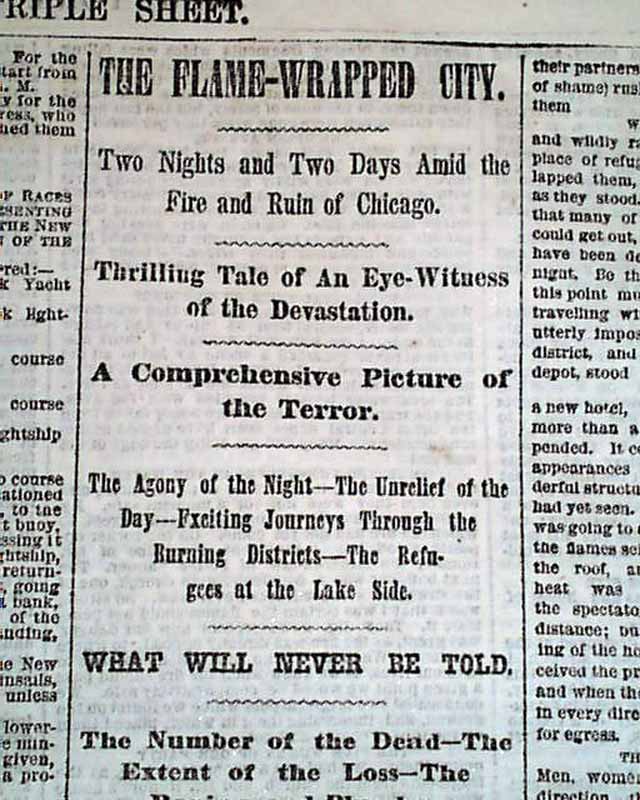
On October 8, 1871, every newspaper in America was writing about the same catastrophe. The Great Chicago Fire had just swept through the city, killing hundreds, destroying four square miles, and leaving a hundred thousand people homeless. It was a tragedy that would be retold for generations.
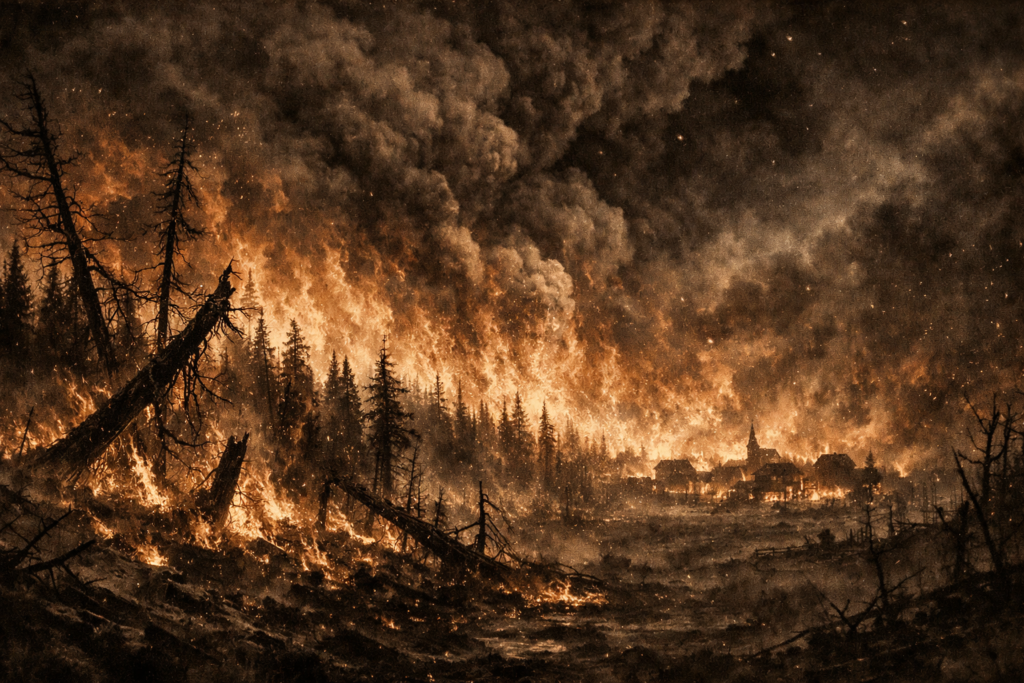
That same night, the same wind, the same dry autumn air, a wall of fire consumed an entire American town in Wisconsin. It moved at sixty miles per hour. It generated its own weather. It killed at least 2,500 people, possibly more, in a matter of hours.
Most Americans have never heard of it.
The Peshtigo Fire remains the deadliest wildfire in recorded United States history. It consumed over 1.2 million acres across northeastern Wisconsin and parts of Michigan. It wiped the town of Peshtigo, Wisconsin off the map so completely that survivors had no way to know if anyone else had survived. And yet, because it happened on the exact same night as a more famous fire in a more famous city, it was buried almost immediately, drowned out by the ink already being spent on Chicago.
The Town at the Edge of the Wilderness
Peshtigo in 1871 was a mill town, carved out of dense pine forest along the banks of the Peshtigo River. It had a population of roughly 1,700 people, a large woodenware factory that employed most of them, and a sawmill that ran day and night. The forest stretched away in every direction, vast and thick and, by that October, catastrophically dry.
The summer of 1871 had been punishing. Rainfall across the Midwest and Great Lakes region was far below normal. The forests of Wisconsin that had been heavily logged left behind mountains of dried brush and timber scraps resulting in a tinderbox waiting for a match.
What sparked it has never been definitively determined. Small fires had been burning throughout the region for weeks. Loggers, farmers, and railroad crews routinely set fires to clear land, and many of those fires had gotten loose. By early October, a pall of smoke hung permanently over the county, and residents were nervous. But nobody left.
And then the wind came.
The Fire That Made Its Own Storm
What happened on the night of October 8th was not simply a wildfire. It was something more terrifying — a firestorm. The combination of drought conditions, enormous fuel loads, and a powerful southwest wind created a fire that generated its own atmospheric system. Superheated air rose thousands of feet, pulling in oxygen from every direction, creating cyclonic winds and, in some accounts, fire tornadoes.
Survivors described the sound as a freight train. Then a roar like nothing they had heard before. Then everything was on fire at once.
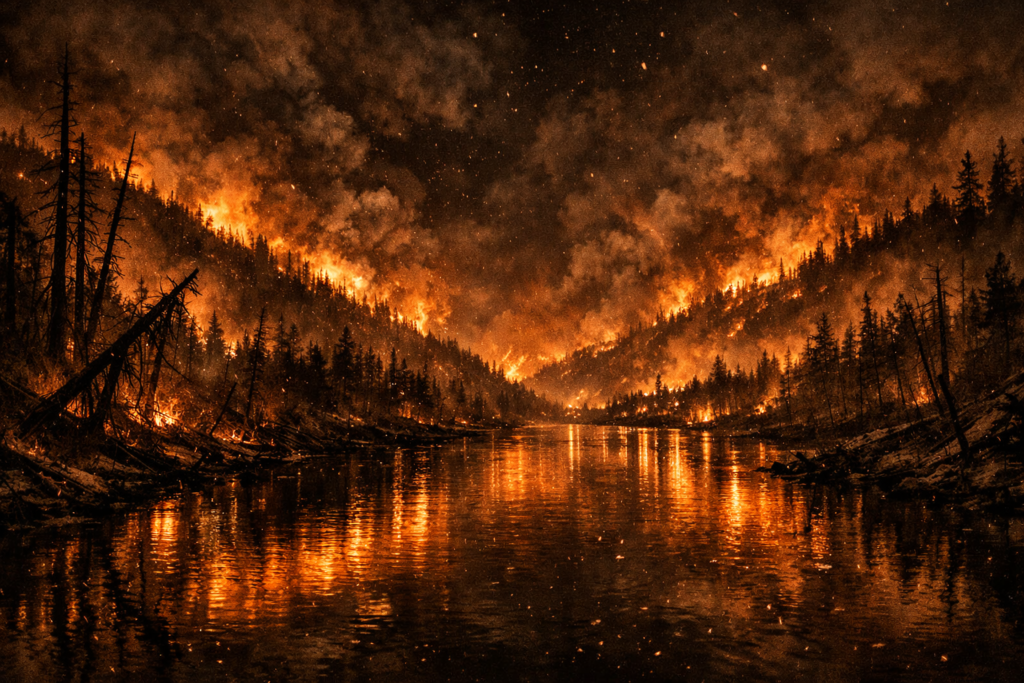
The fire crossed the Peshtigo River as if the water wasn’t there. People who had waded into the river to survive were pushed underwater by the heat and the force of the atmospheric updraft. Some survived. Many did not. The fire burned the very ground, consuming the peat beneath the topsoil. In some areas, the earth itself appeared to have been on fire.
Entire families were found burned where they stood, unable to run fast enough. In one terrible and well-documented account, a group of people who had taken shelter in a field were found in a circle, holding hands, incinerated together.
In the town of Peshtigo itself, nearly every building burned. The factory, the homes, the church, the hotel was gone in less than an hour. Of the town’s approximately 1,700 residents, somewhere between 800 and 1,200 died that night.
The Towns Nobody Counted
Peshtigo was not the only community that burned. The fire swept through Sugar Bush, Rosiere, Brussels, Williamsonville, and dozens of smaller settlements across Door County and beyond. In some communities, the mortality rate was nearly total.
In Williamsonville, all but a handful of residents were killed. Survivors found the dead stacked in some places several deep, people who had tried to flee together and been overtaken all at once.
The total death toll has never been precisely established. The 1871 census records for the affected region were destroyed in the fire itself. Modern historians estimate between 1,500 and 2,500 deaths, with some placing the number higher. For comparison, the Great Chicago Fire killed an estimated 300 people.
The reason the numbers have never been precisely counted is simple: in some of the burned areas, there was almost no one left alive to do the counting.
Why Nobody Knows
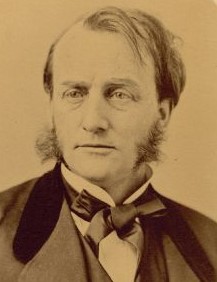
When Governor Lucius Fairchild of Wisconsin learned of the disaster, he requested federal aid immediately. Congress responded slowly, and with far less urgency than was applied to Chicago. The telegraphs from Peshtigo struggled to compete with the telegraphs from Chicago for the nation’s attention. Newspapers that might have led with Peshtigo instead ran it as a footnote beneath their Chicago coverage.
The relief efforts that did arrive were inadequate. Food, clothing, and medical supplies came, but the infrastructure to distribute them was gone. Roads had burned. The bridges were ash. The people who might have organized relief in the community were dead.
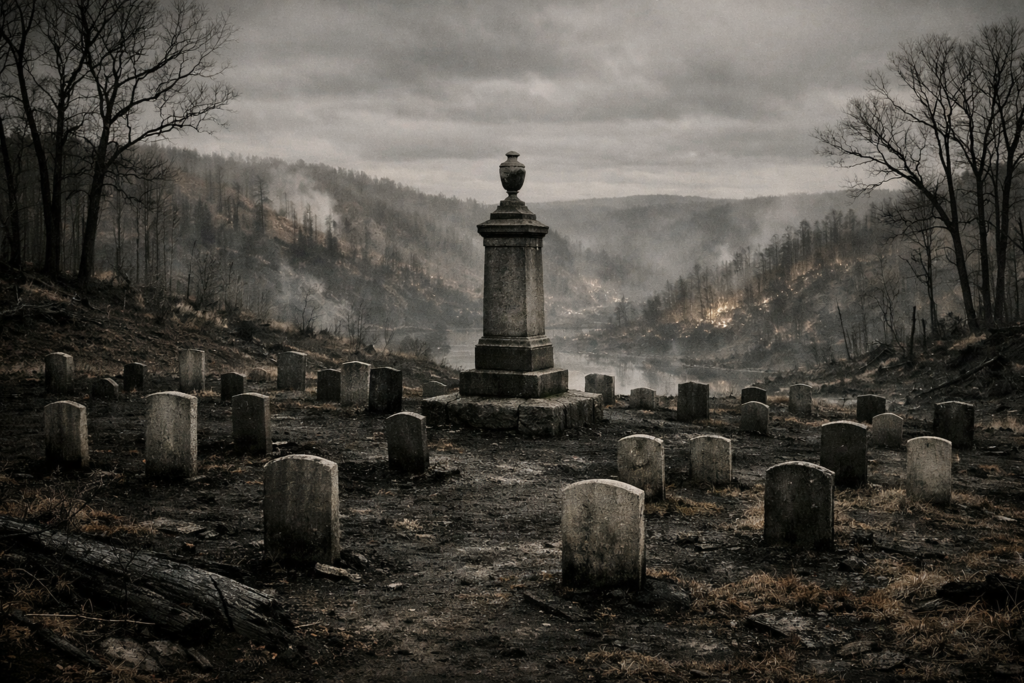
Peshtigo slowly and quietly rebuilt. The new town rose on the ashes of the old one. A cemetery was established for the mass graves of the unidentified dead. A small museum stands there today, largely unvisited, doing what it can to keep the memory alive.
But the fire was never memorialized the way Chicago was. There was no Great Fire narrative, no myth of resilience and rebuilding that entered the American consciousness. There were only the graves and the silence.
On October 8th of every year, two fires are remembered. One of them has its own Wikipedia disambiguation page. The other has a cemetery in Wisconsin where 350 unidentified dead lie in a single mass grave.
That is the whole story of why some history gets remembered and some history does not. It has nothing to do with scale. It has everything to do with which city had the better press.
Leave a Reply